Sponsored link
TradeAJellycat game iconTradeAJellycat
Items and rewards

Trade A Jellycat! Items and Rewards

The items are Jellycat plushes; the documented reward channels are collecting, crates, and trading. This reference separates what the game publishes from what it never has — checked 2026-10-07.

Checked 2026-10-07Place 84814013871277

Quick answer

Trade A Jellycat! is a plush-collecting and trading game, and its items are exactly what the title says: Jellycat plushes. The official description documents three ways to add them to your "dream inventory" — collecting them in the game world, opening plush crates, and trading with other players on the boards — and it confirms a rarity system exists ("Some Jellycats are rarer than others!"). What no dated source provides is the layer beneath: plush names, a catalogue count, rarity tier labels, crate names or odds, or code rewards. Those gaps are findings, not placeholders — every fan list that claims otherwise either describes the same-name [MUTATIONS] game (a different place ID) or fabricates entries.

Documented systems

What the game itself publishes about items

From the official Roblox description and APIs, checked 2026-10-07.

SystemOfficial wording / findingSource
CollectingThe official description centers the loop on collecting Jellycat plushes and building a "dream inventory".Official
Plush cratesThe official description says players "open plush crates to grow your collection" — crates are a real, named system.Official
Relative rarityThe official description states "Some Jellycats are rarer than others" — rarity differences exist, but no tier names are published.Official
Board tradingThe official description documents the full five-step trading-board flow, including accept, cancel, and request-more pads.Official
Small serversServers cap at 15 players (official games API, checked October 7, 2026).Official
Obtainment channels

How items reach your inventory

Ranked by how much the game documents them.

1. Collecting in-game

The description's first loop step. Collecting is the zero-cost channel and the one every other channel amplifies — crates and trades both only matter because a collection exists to grow. Track what you pick up on the collection shelf so "new versus duplicate" is a glance, not a memory test.

2. Plush crates

Officially stated: "Open plush crates to grow your collection." Crates are the game's randomized channel, and randomized channels are where discipline pays: the game publishes no crate names, costs, or odds, so the crate data planner's budget-first method (fixed session budget, logged pulls, counted duplicates) is the only approach that produces real information instead of guessed percentages.

3. Trading on the boards

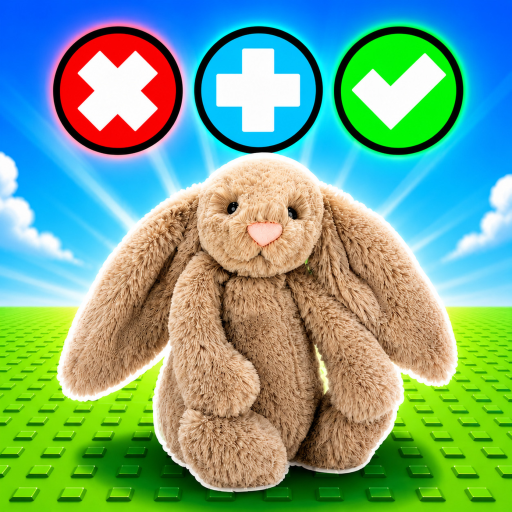
The five documented board steps — place items, both step on ✅, jump on ❌ to cancel or ➕ to request more — turn duplicates into the currency of the game: duplicates are the classic thing offered, and new-to-collection plushes the classic thing wanted. The offer planner and trade checker wrap that flow in pre-accept checklists.

4. Codes — no verified channel

Every dated check through 2026-10-07 found no code string tied to place 84814013871277. The codes page documents the finding and the redemption-UI status instead of guessing a menu path.

Open items

What stays undocumented — and why that matters

One compact register; the short version of this site's standing rule.

  • •Named Jellycat catalogue — no official or community list ties plush names to place 84814013871277
  • •Rarity tier names and order (e.g. which labels the game uses above "common")
  • •Crate names, costs, contents, and odds
  • •Trade values, demand scores, or any official value list

These fields stay open until a source names this exact place ID. The practical consequence: any page — here or elsewhere — that prints a Trade A Jellycat! value number, rarity tier, or crate percentage today is guessing. When the developer publishes real tables, this wiki gains them with a checked date; until then the useful content is the documented systems plus player-side method, which is what these pages contain.

FAQ

Items and rewards questions

What items exist in Trade A Jellycat!?

Jellycat plushes — that much is official: the description centers on collecting them and says some are rarer than others. No named catalogue (which plushes, how many, what they look like as in-game items) has been published for place 84814013871277 in any source checked through 2026-10-07, so this page documents the systems rather than inventing a roster.

How do you get items?

Three documented channels: direct collecting in-game, opening plush crates (the description's stated way to grow a collection), and trading with other players on the boards. A fourth channel — code rewards — has no verified string for this game in any dated check.

What rewards do crates give?

The description says crates grow your collection, which makes plushes the documented crate outcome. Crate names, costs, contents, and per-outcome odds are all unpublished — see the crate data planner for how to run sessions without them.

Which Jellycats are the rarest?

Unanswerable with current sources: the game confirms rarity differences exist but publishes no tier names. Any "rare Jellycat list" you see elsewhere either names a different Roblox game or invents one. The honest substitute is observed demand — which plushes players repeatedly ask for on the boards.

Are there codes for free items?

No code string is verified. Checks on August 11, September 9/14/17/21/29, October 3, and October 7, 2026 found no code string tied to this exact place. The codes page keeps the dated finding and the recheck rules.

Related help

Where item decisions continue

Return to the Trade A Jellycat! wiki hub