Sponsored link
TradeAJellycat game iconTradeAJellycat
Offer planning

Trade A Jellycat! Offer Planner

Trading is the endgame of Trade A Jellycat! — the description's own goal line is a "dream inventory" — so plan both sides of a board trade before anyone touches the accept pad.

The documented board flow, and who controls each step

Every trade in Trade A Jellycat! runs through the same documented five-step flow, quoted straight from the official description (checked 2026-10-07). The planner's doctrine comes from reading that flow as two roles: the offerer controls what gets placed, the reviewer controls whether it gets accepted, and the cancel and request-more pads exist precisely so that neither role is ever trapped in a half-built trade.

Step (official description)Who controls it
1 — Stand on a trading board with someone else.Both players place; each side owns its own items
2 — Place the Jellycats you want to trade.Both players place; each side owns its own items
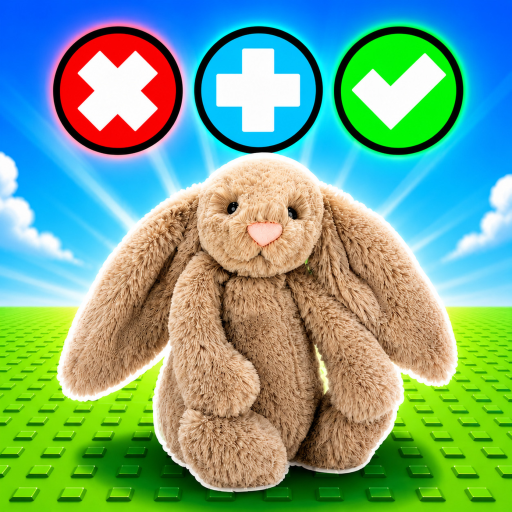
3 — Both players step on the ✅ pad to accept.Both players — only after every check
4 — Jump on the ❌ pad to cancel.Either player, at any time
5 — Jump on the ➕ pad to request more Jellycats.Either player, at any time
Role doctrine

Two checklists, one board

Run your own role's list first, then expect the other player to run theirs.

Offerer role — before you place

  • •List every Jellycat you plan to give, and mark which are duplicates versus collection pieces you would miss.
  • •Decide your minimum before the board: what you want back, and what you will not accept.
  • •Place the agreed items yourself — never rely on the other player to place your side.
  • •Re-read the board after both sides are placed; board changes are the classic last-second risk.

Reviewer role — before you accept

  • •Check rarity evidence on what you are being offered, not just what the other player says it is.
  • •Compare the offer against your collection goal: new plushes beat duplicates, however shiny the duplicates are.
  • •Use the ➕ request-more pad instead of accepting a thin offer you will regret.
  • •Step on ✅ only when the final board matches every check — and ❌ the moment it does not.
Worked examples

Two trades, planned end to end

Both use only documented mechanics and the checklists above.

Example 1 — the clean duplicate swap

You hold two of a plush your shelf marks as duplicate-pair; the other player collects that line and holds a plush missing from yours. Offerer checklist: both sides place their own items, nothing left to chat promises. Reviewer checklist: the incoming plush is new-to-collection, the outgoing one is your marked duplicate — rarity evidence looks even, and nobody is rushing. Both players step on ✅ with the final board matching the plan. That is a complete, documented-flow trade with no values needed.

Example 2 — the pressured thin offer

The other player places one plush and types "accept fast, I'm leaving". Reviewer checklist: your goal is new plushes, and the offer is one item for two of yours — thin. The documented counters exist for exactly this: jump on ➕ to request more, and if the answer is pressure instead of items, jump on ❌. A cancelled board costs nothing; the flow's exits are official. If they re-offer properly, the board restarts and every check runs again.
FAQ

Offer planner questions

What does the offer planner actually plan?

A board trade has two roles — the player offering and the player reviewing — and the planner gives each a checklist built on the game's documented five-step flow. It produces no fairness score: the game publishes no value list, so the plan is about completing every verifiable check before either player steps on the accept pad.

Is a trade in this game reversible?

The documented flow gives you two exits before completion: the ❌ pad cancels, and the ➕ pad asks for more. Nothing in the checked sources documents an undo after both players accept — so treat the accept pad as final and finish every checklist item before step three.

How do I judge whether a trade is fair without a value list?

On the three axes the game actually gives you: relative rarity (the description says some Jellycats are rarer than others), your collection goal (does the offer complete your dream inventory or duplicate it?), and demand you can observe (which plushes players ask for on the boards). TradeAJellycat publishes no numeric values for place 84814013871277 because none exist in any dated source.

What are the classic risk patterns on trading boards?

Pressure ("quick, before I leave"), moving the negotiation off-board (outside the game's documented flow), offers that change between review and accept, and trades where one side never re-reads the final board. Every one of them is defeated by the same move: re-check the final board and use the cancel pad freely.

Why does the planner keep saying the offer must match the board?

Because the board is the contract. The documented flow completes whatever is physically placed on it when both players accept — verbal promises and chat screenshots are not placed items. If the board does not show the agreed offer, jump on ❌ and rebuild it.

Related pages

Plan with better game context